Being a Master naturalist means that I get to take part in some awesome projects in Central Texas. This one ranks up there as one of my favorites and one of the most intense so far.
Recently the National Wildlife Federation joined forces with the Austin Independent School District to make learning outdoors for urban students more accessible. During these times of economic pressure many urban school districts are struggling to improve Science and Math performance for their students. As Marya Fowler, lead Senior Education Manager for the NWF, who is valiantly spearheading this project states: ” Learning in the outdoors, where a student’s experience is hands-on and inquiry-based, draws students into these disciplines in a way textbooks and classroom exercises often do not.” With this in mind she states that “we are creating a model wildlife habitat that will serve as an environmental education and training venue for thousands of children and teachers in Austin and central Texas.”
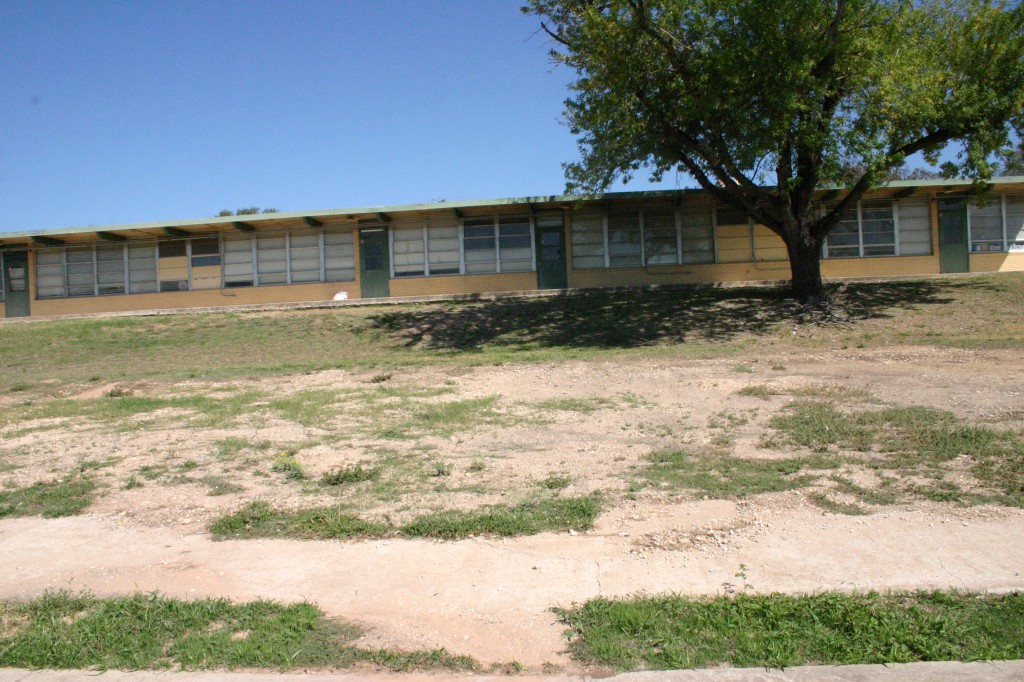
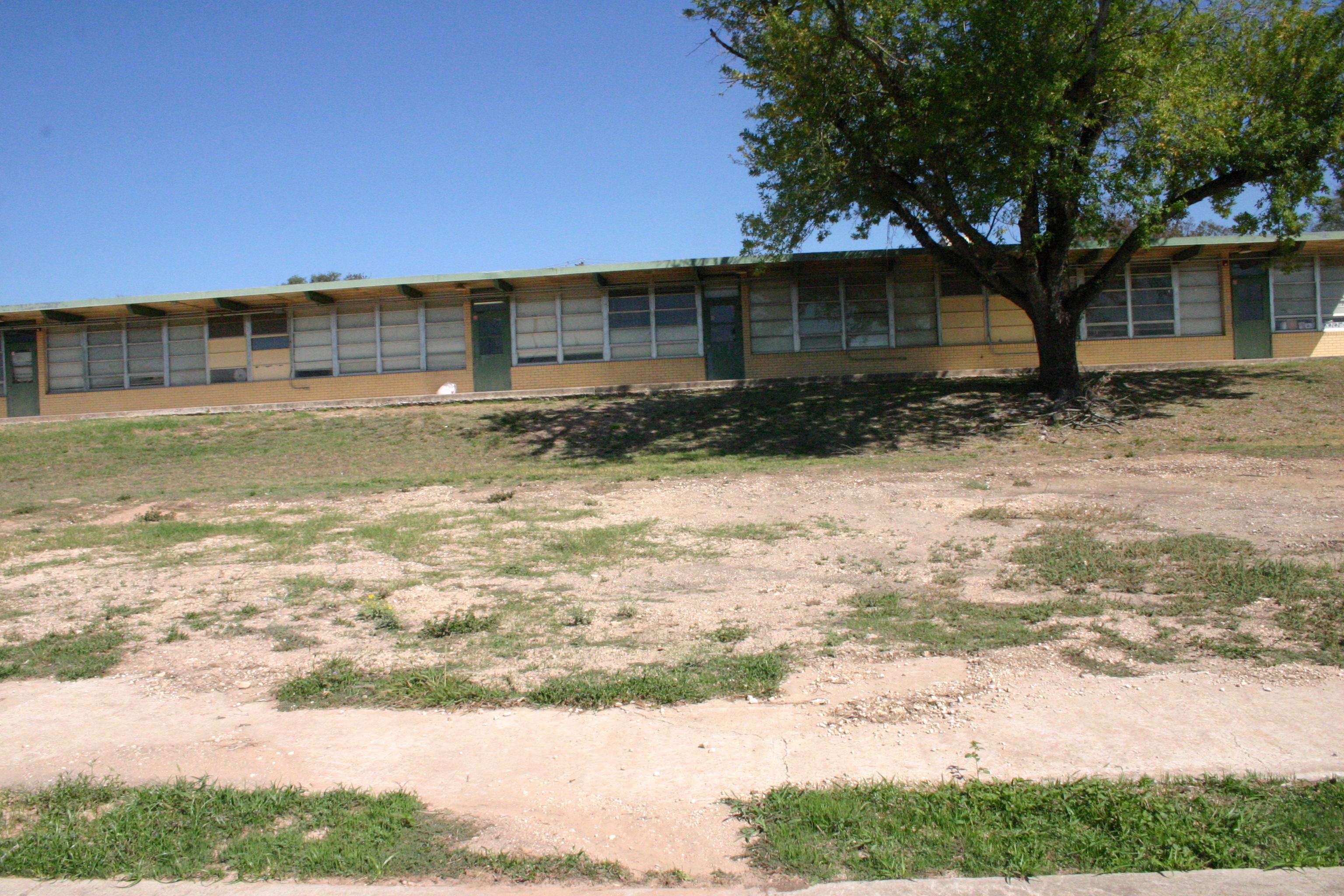
The “before” picture of the location for the future wildlife demonstration garden at the AISD’s Science and Health Resource Center. Compacted earth and indestructible Bermuda grass is the prevailing theme here.
The project is extensive. It is located at the AISD’s Science and Health Resource Center and includes the setup of a variety of curriculum-based learning stations, which include native plants that attract birds, butterflies, and other wildlife. A rain garden and benches will be setup as well. There will be a little pond for wetland plants and native fish. Interpretive signs will be stationed in various areas, and a rain harvesting system will help focus on water conservation. An all important endeavor during these times of drought. Marya states that: ” Our ultimate goal is that the design elements of this model wildlife habitat will be easily replicable, and will inspire educators to build habitats on their own campuses to use as outdoor classrooms and advance science learning throughout central Texas.”
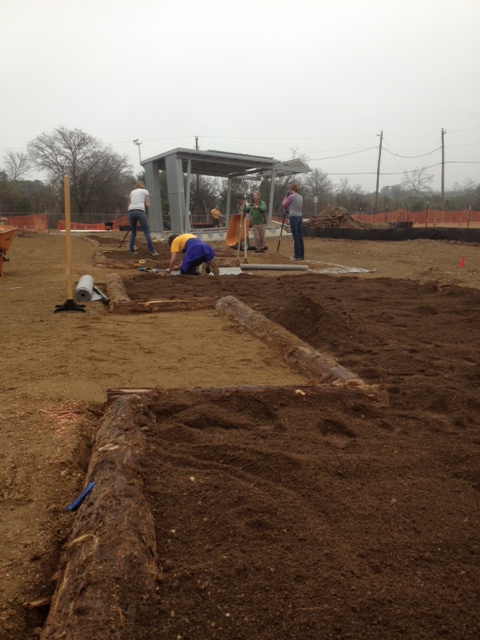
Installed raised beds for butterfly and bird attracting plants. These are filled with soil.
Over 50 volunteers are helping with this project and it will still be some time before it is completed.
The project is extensive. Terraces had to be setup on the steep slope to build garden beds and to slow the water runoff from rain.
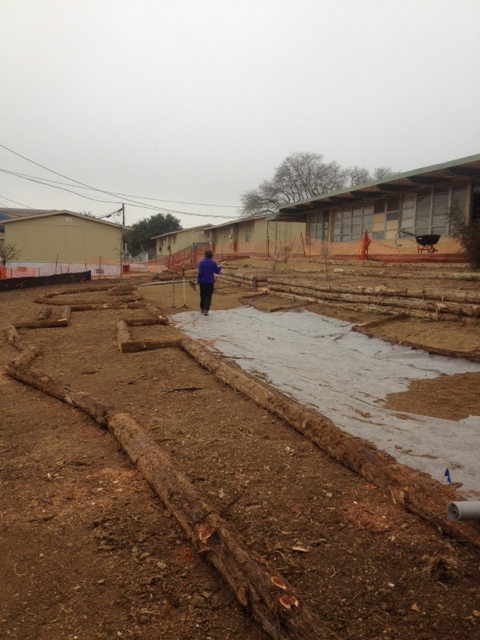
Setting up of terraces with Ashe Juniper logs.
The ground was very compacted and had to be loosened with pickaxes to dig holes for trees and for the planting beds. It was an excellent workout!
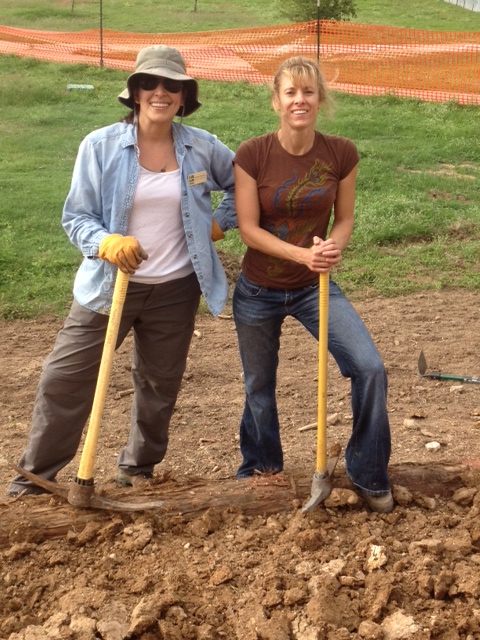
The Pickaxe Chicks
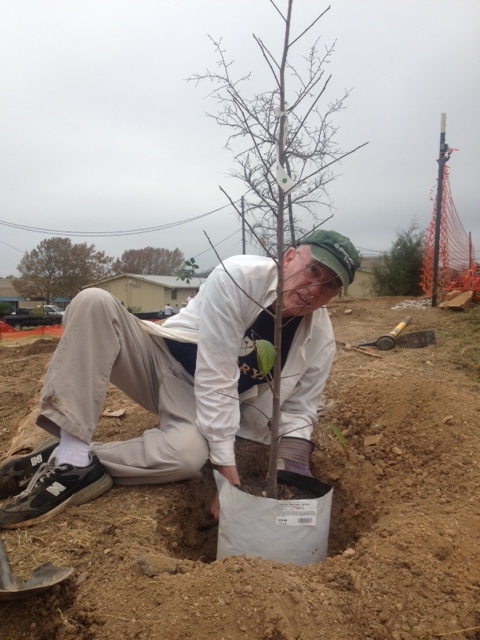
Jim planting Carolina Buckthorn.
A splash zone was built to prevent water crashing down from the roof from eroding the beds below.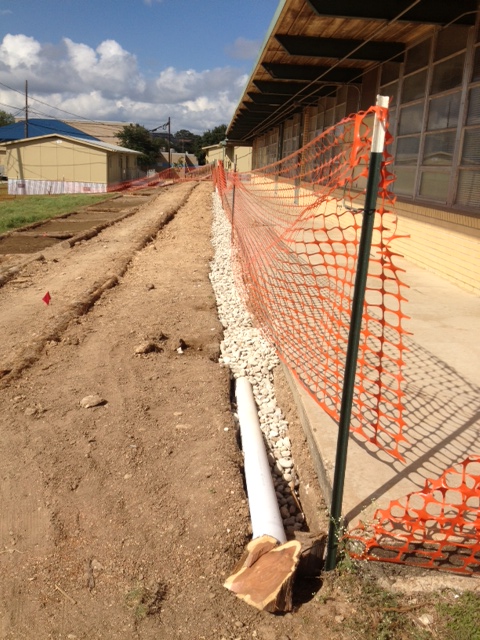
Raised beds and pathways outlined by logs.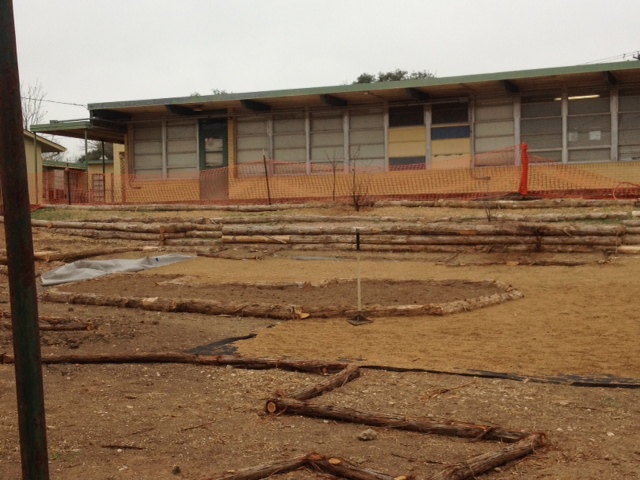
Local kids got involved too. They were excellent workers, digging trenches, filling splash zones with rock and planting trees.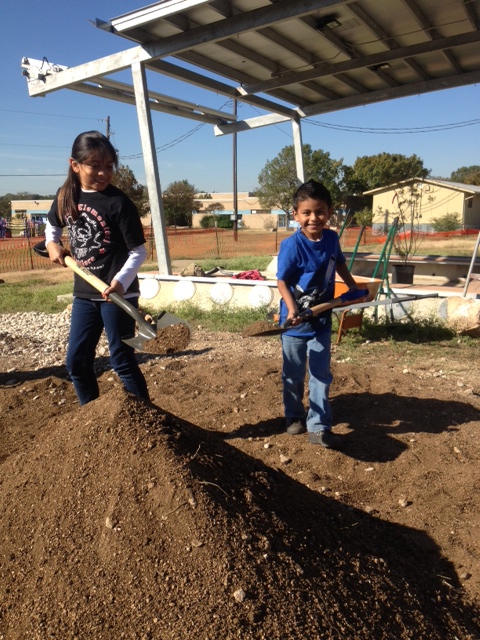

Work in progress, looking from the building down to the grounds. Pathways and planting beds are under way.
Things are taking shape. Trees have been planted and are diligently watered. Pathways have been created and protected with landscape cloth and crushed granite. Planting beds are filled with good soil.
It’s a pretty large project and there is still a ways to go, but everyone is very excited about how it will all turn out. 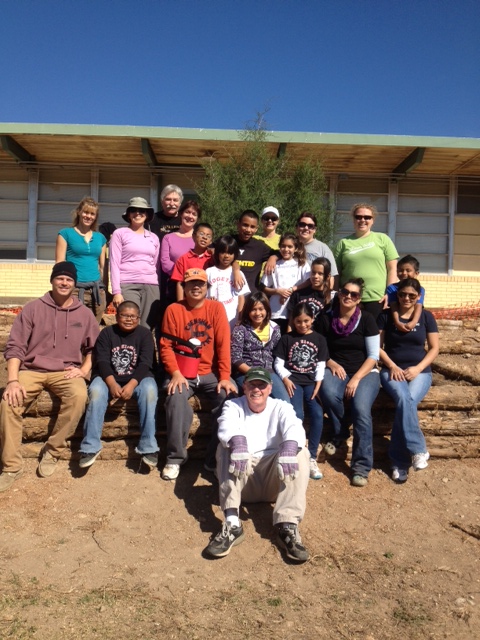
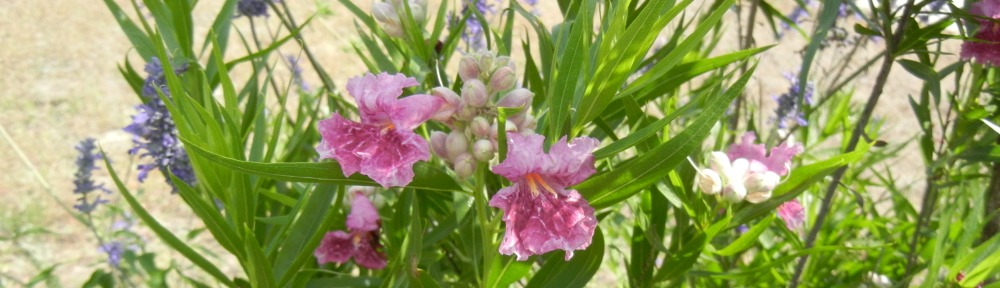
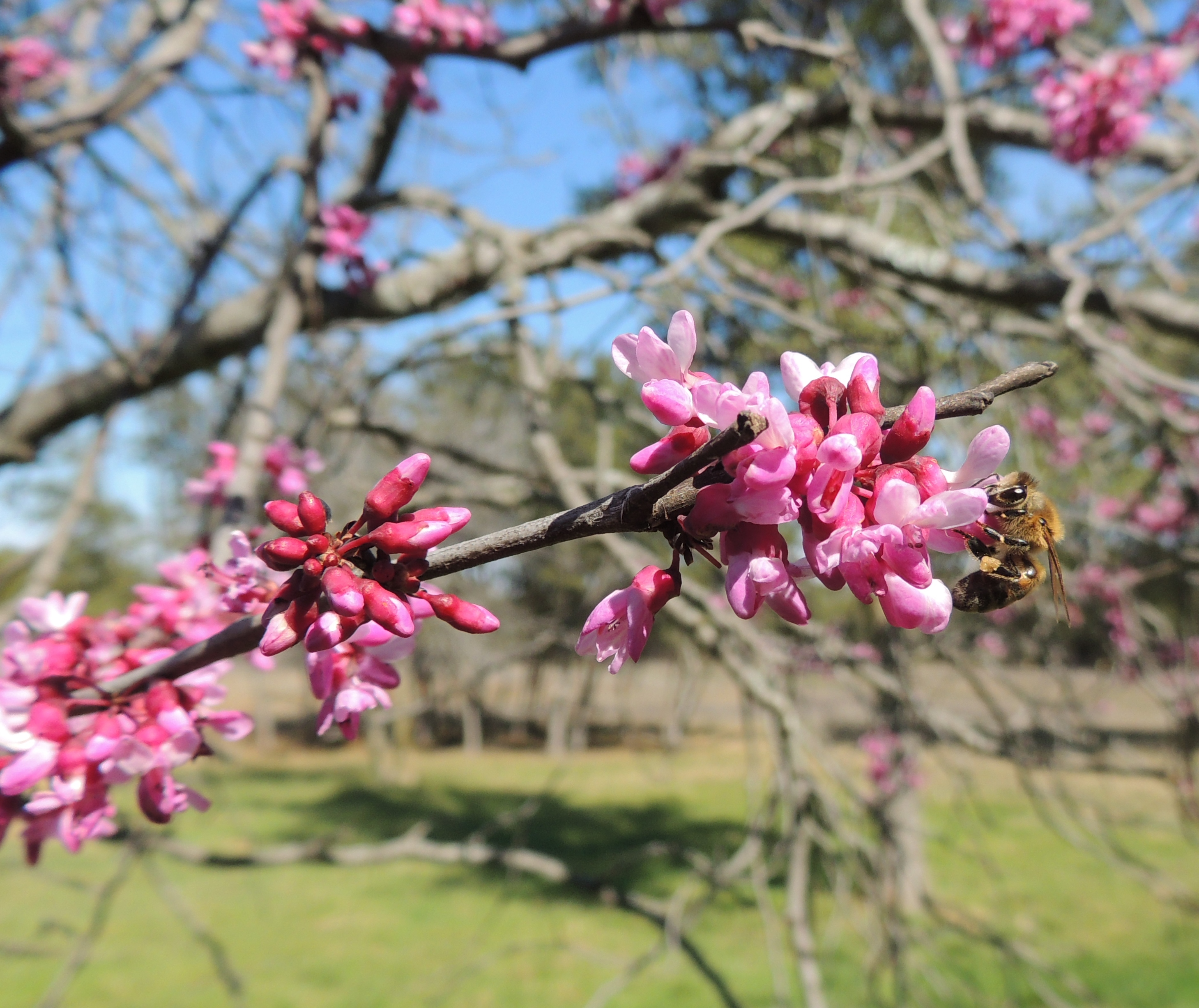
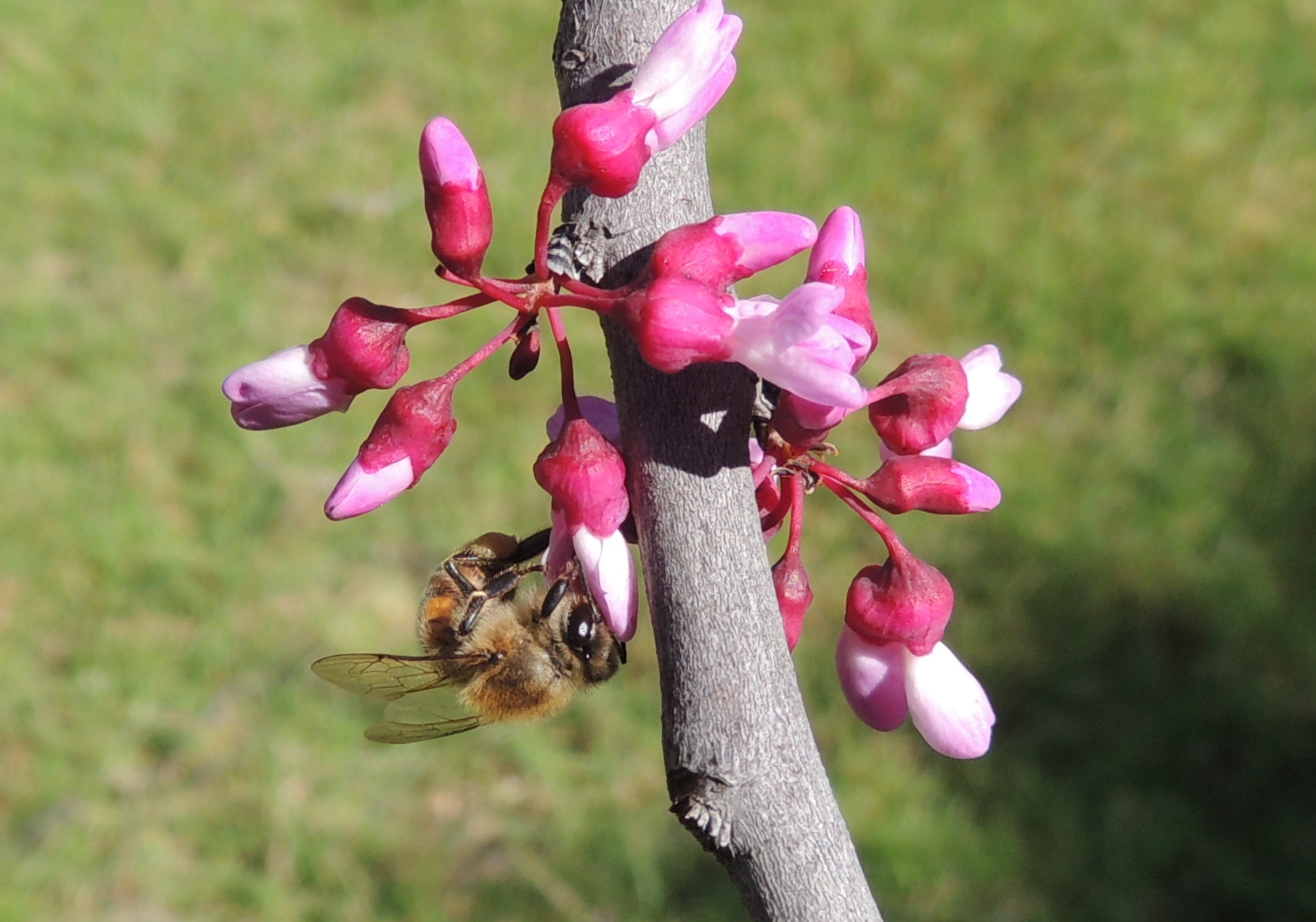
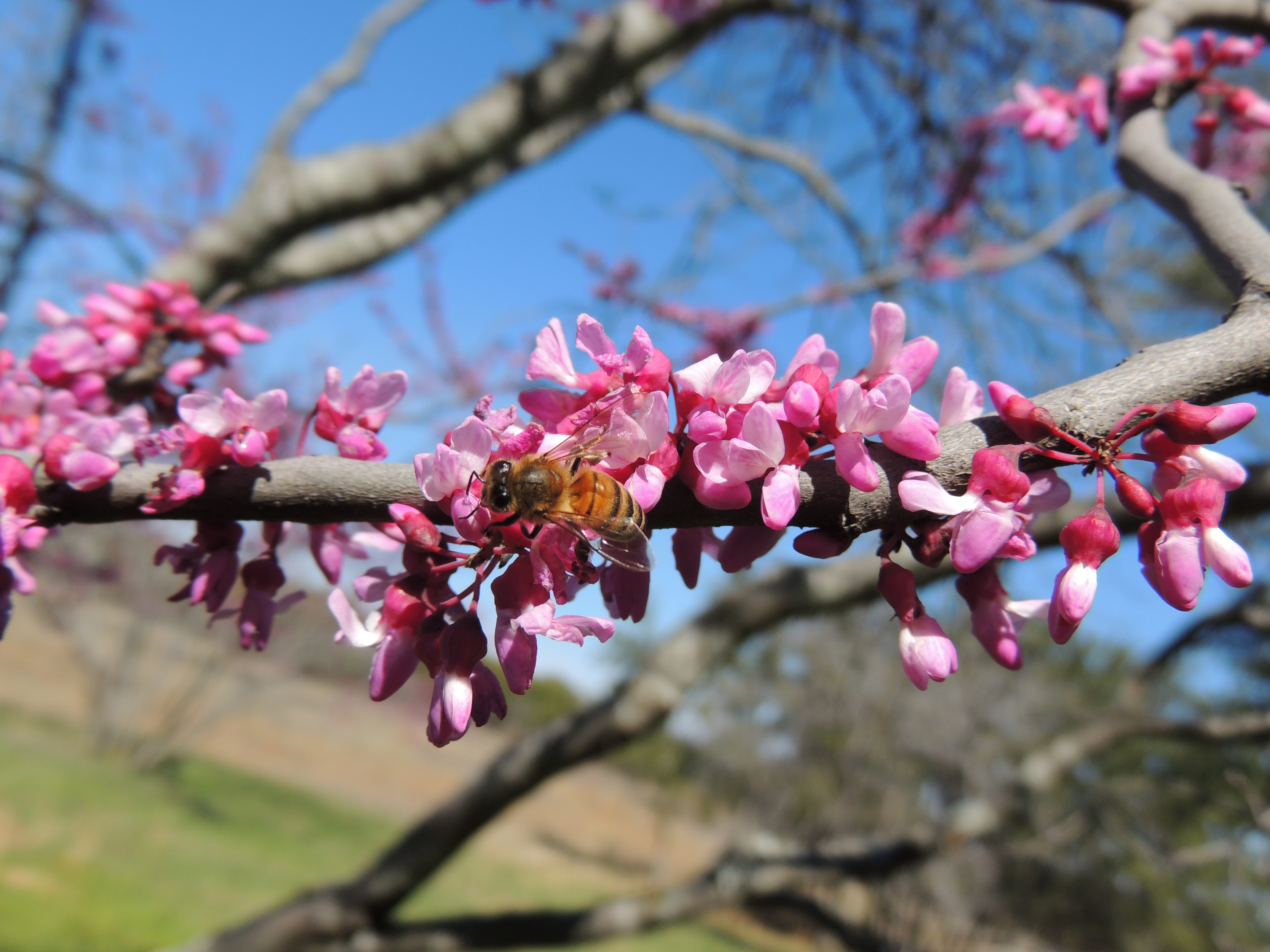
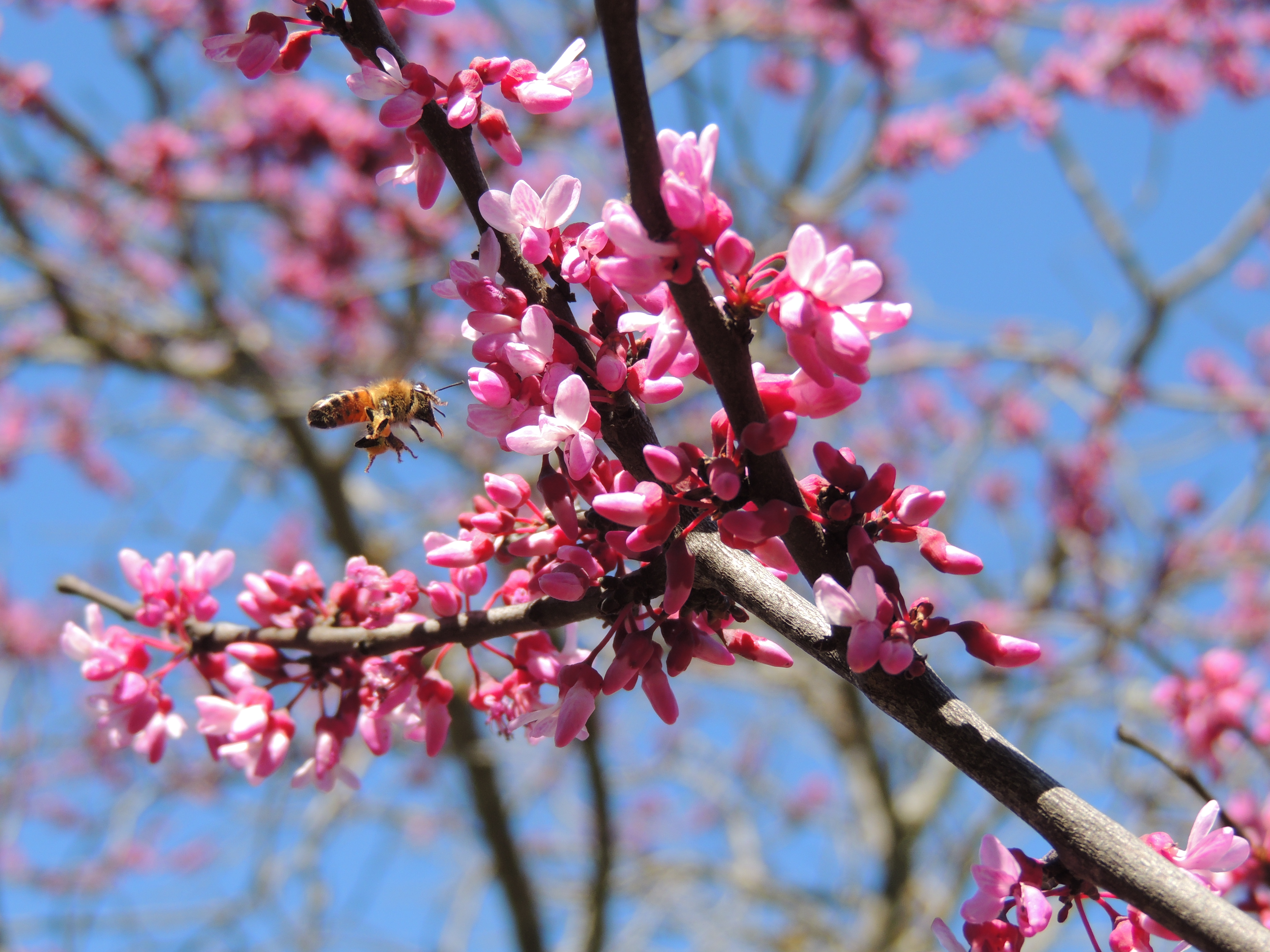 I zoomed in on this bee and if you look closely you can tell she is so excited about dining on some sweet nectar, that she has already extended her proboscis (tongue used to suck out nectar from flowers). Usually they keep that tucked in until they get to the source. But she was getting ready! Talk about focus! She’s just homing in on the sweet juice waiting for her.
 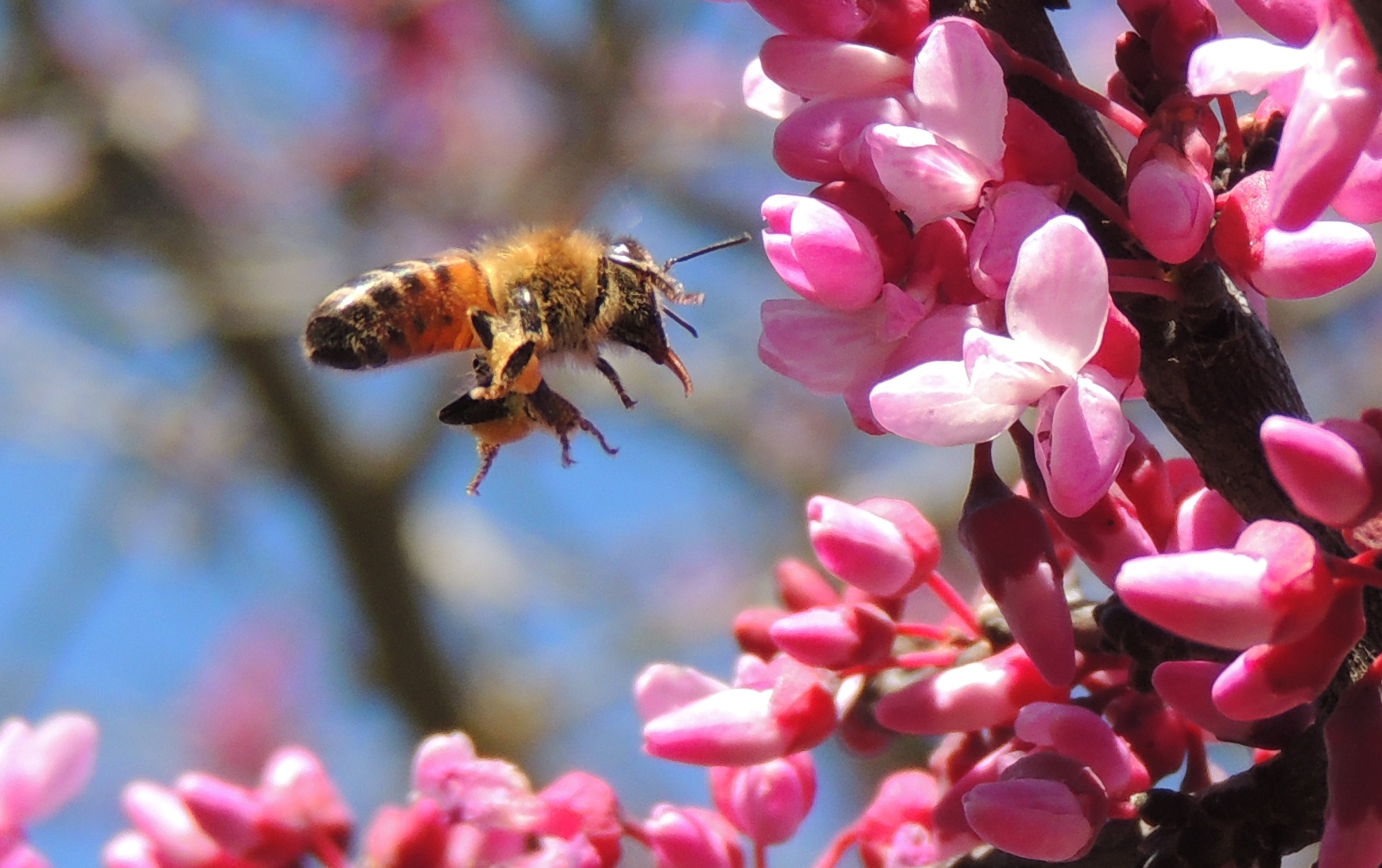 All her legs are filled with orange sacs of pollen too. She will take this home and it will be unloaded by other bees for her. They will use it to feed the young. It’s a good time for bees.
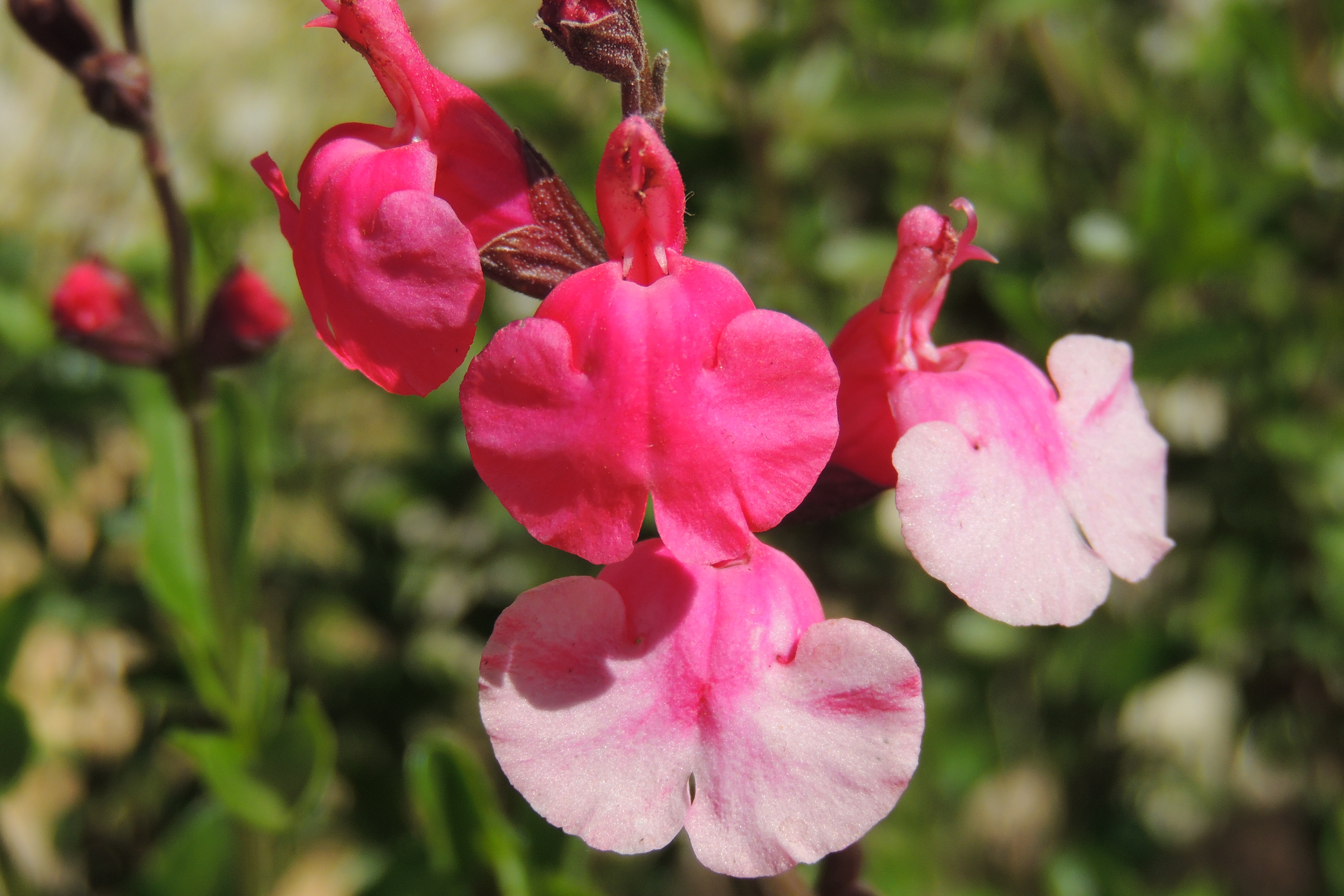 Hopefully we get some more rain to continue the bounty.