
The pollen is on! The bees are crazy busy bringing home some beautiful orange pollen. The bounty is so large there is a veritable traffic jam at the entrance of my hive with all the bees bringing home the gold. I have no idea which trees are in bloom, but my bees are bringing back the orange pollen by the bucket loads. 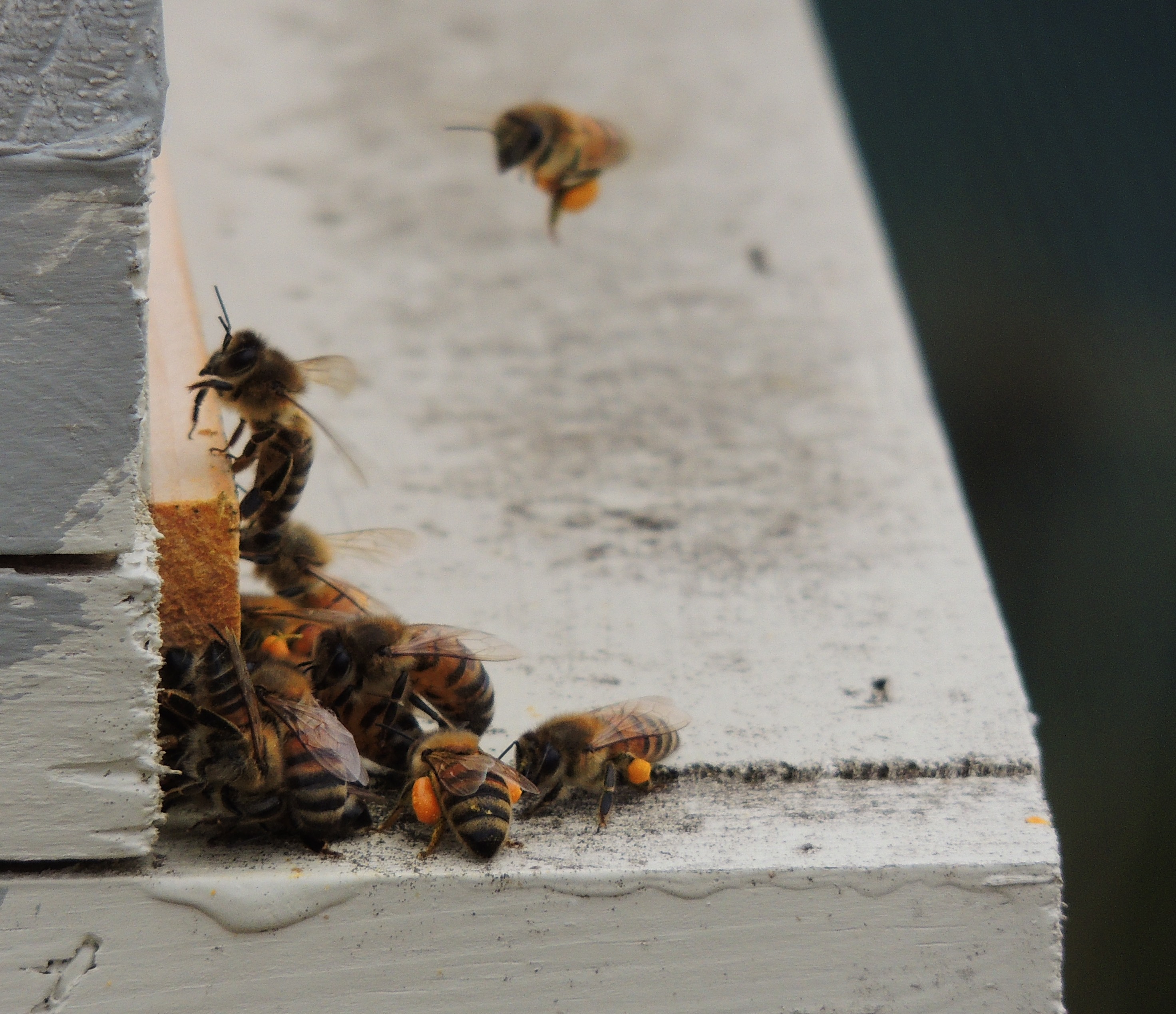
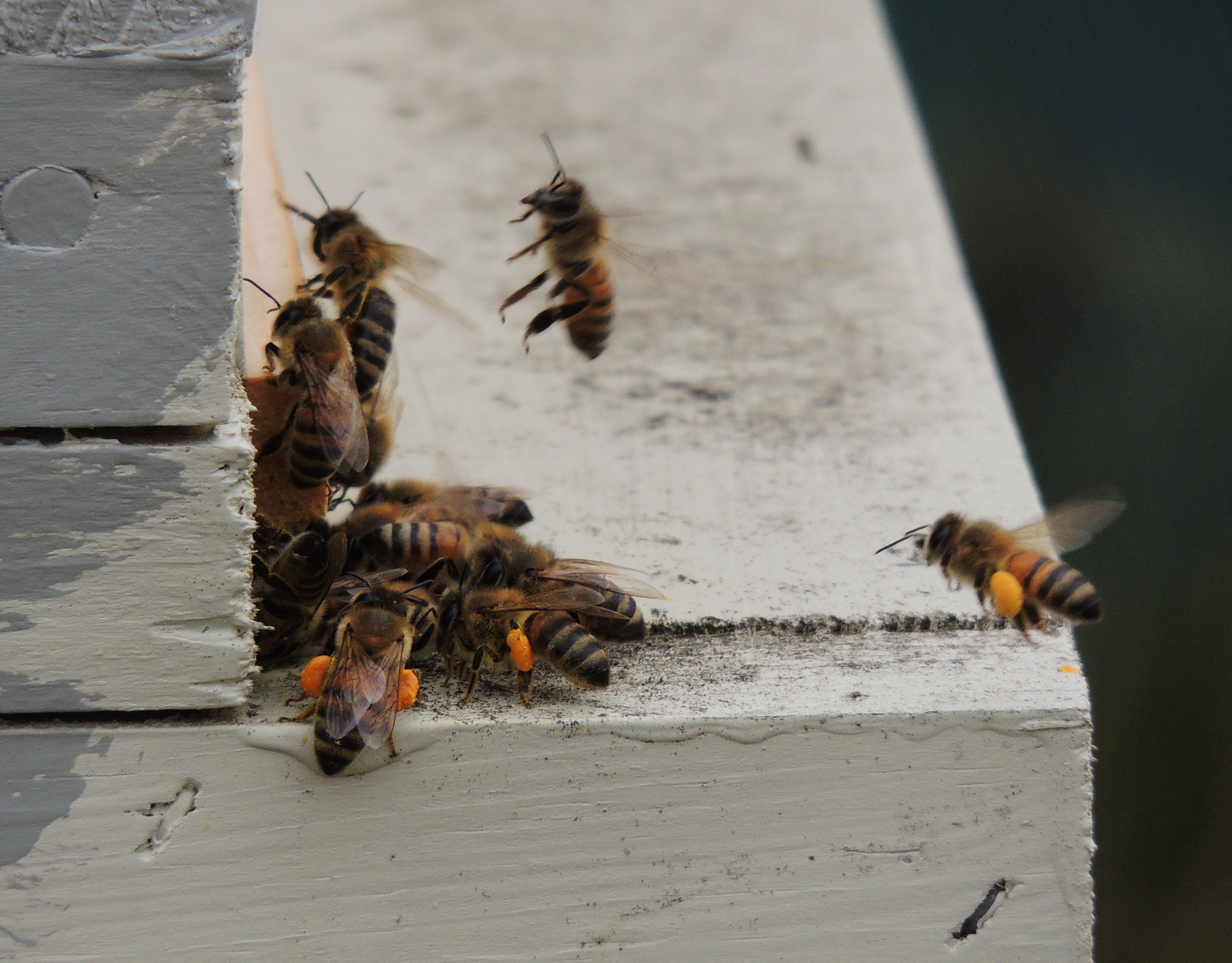 This is excellent news since this means that my queen is laying eggs and the brood is growing. Next week I will be opening the hive (weather permitting of course – can’t bee too cold!) to see what is going on in there. But from the outside all looks well.
My Texas Redbuds are about to bloom too. That always causes a big bee frenzy. I can’t wait to what color that pollen will be.
Next to the house is this old scrubby looking shrub. I don’t quite know what kind of plant this is. Perhaps an Acacia of some sort. Its always first to bloom here in my yard. Tiny little blooms that the syrphid flies enjoy. Only one honey bee has found it as seen below.
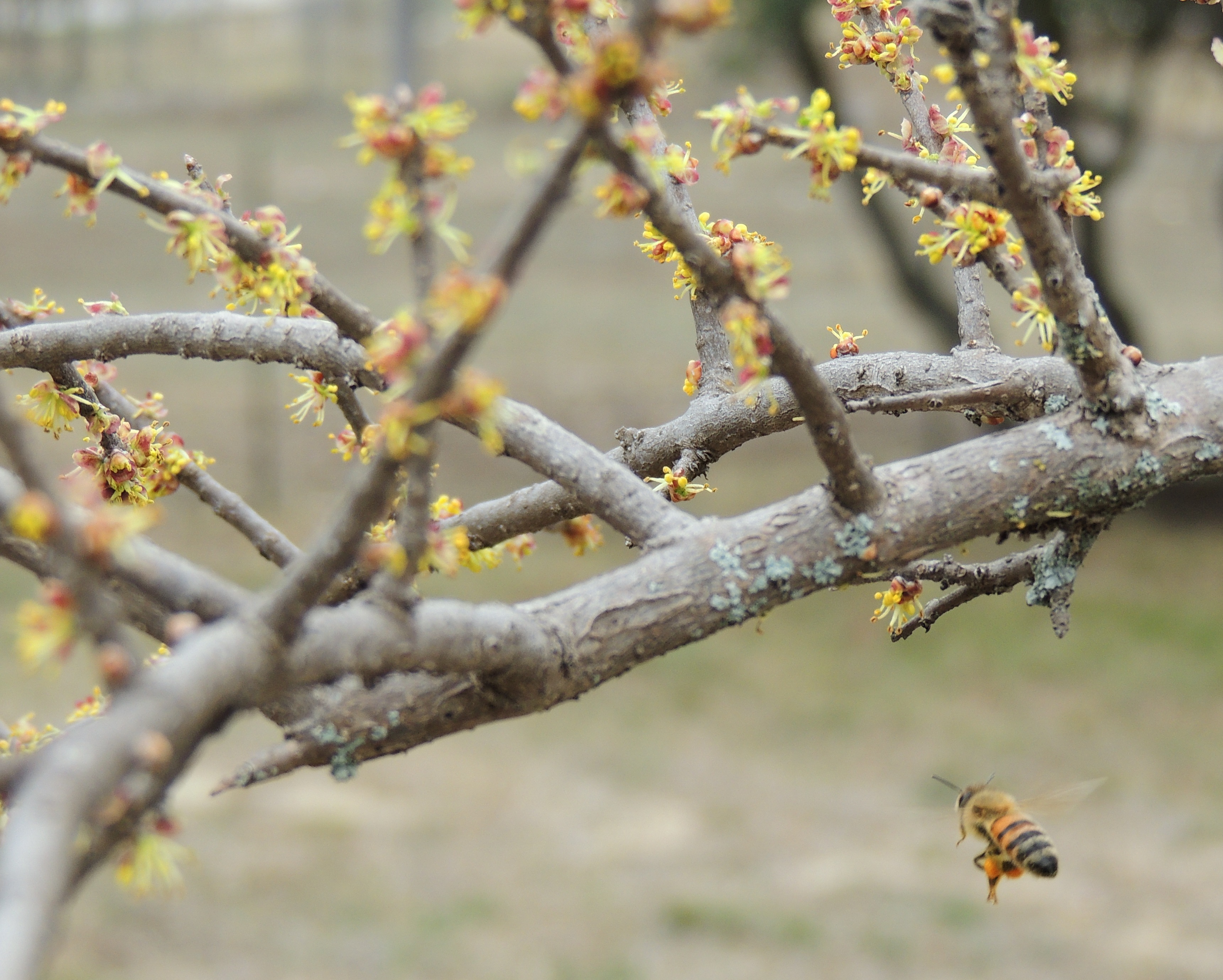 I guess this is just not worth the effort of calling any of her sisters out here, since something much larger and bounty full is blooming out there. Only my girls would know where that is and they’re not sharing! 🙂
You uncle opened a hive at night! Now that is gutsy. I usually open mine during the warmest time of day when all the soldier, guard and forager bees are out of the hive collecting pollen and nectar. This way there are less bees around to get mad at me opening the hive, and less bees means less risks of getting stung. 🙂
Smoke definitely does calm the bees down. It is said to mask any alarm pheromones they might send out when you open the hive and some say it alerts the bees that there is a fire nearby. Having smelled the smoke they will gorge themselves on honey so that they will survive longer in case they need to escape the hive. Full bees are happy and calm bees. 🙂 Also smoke has the nifty ability to mask the alarm pheromone that is inserted on the sting they give you. This avoids other bees going to the same spot and stinging you also. Handy that smoke!
Now aren’t you the bees knees!?!? I think you’ve got the bees and hives down to an art! Well, I didn’t think about it at the time, but it was totally dark and using the car headlights. Even with protection I noticed the next day that his face and back of his neck had quite a number of stings. Again, thanks for the education! This is good stuff!!!
I could go on and on and on and on about bees. They are fascinating to me. They work as a whole unit, all individuals contribute – no fighting, bickering (ok maybe every now and then just a little) and they get the job done! As I said – on and on – just stop me anytime. 🙂
Thank you, Heike, for the superb bee education! I watched honey being removed from a hive only once when I was in my mid-teens on my Uncle’s farm in VA. He did it at night by car headlights, well protected, with a smoking piece of burlap bag inside a bellows. I think he told me the smoke had a calming effect on the bees.
You are an excellent writer! A real rarity in these days of acronyms!!
Hi Jim,
Thanks. Opening the hive in spring is to check the condition of the bees after the winter and to see if the queen is alive and has started laying eggs. Also I will be checking for new brood and if they have enough honey and pollen stores until there is a reliable source of nectar.The queen does not lay eggs in winter so as to keep the bee population in check until they can go out and forage for nectar reliably. I won’t take honey till fall since they are just coming out of winter where they usually eat the honey to survive. Hopefully we’ll have a nice rainy spring and lots of flowers will be blooming to start a honey flow. This means that the bees will make lots of honey for themselves and maybe for us too!
When you open the hive is it to check the condition of the hive and the swarm or do you also remove honey at the same time? Love the pics of these female “worker” bees! Nice!!